The short version
A water damage smell is usually musty and earthy, and it means materials are still wet or mold has started. Masking it does not help. Find the source, stop the water, and dry the area. The EPA advises drying in the first 24 to 48 hours. A sewage smell is different: call a professional.
What does water damage smell like?
Water damage smells musty, earthy and damp, like a wet basement or a towel left in a bag. That water damage smell usually means materials stayed wet long enough for mold or mildew to start, or that something is still wet where you cannot see it. The smell is a clue, not a diagnosis.
People describe it in different ways: a cellar smell, a wet-dog smell, a sour smell from carpet, or a sweet, stale smell from inside a wall. All of them point to the same thing, which is moisture that has not gone away. This guide explains what the smell means and what to check before you call anyone.
Does a musty smell mean there is mold?
Not always, but it is a good reason to look. A musty smell means damp materials are giving off odor, and the EPA says mold needs moisture to grow. If the smell is there and you have had a leak, flood or humid summer, assume something is wet until you find out otherwise.
The CDC says mold can cause a stuffy nose, sore throat, coughing or wheezing, burning eyes or a skin rash. People with asthma or a mold allergy can react more strongly, and people with weakened immune systems or chronic lung disease can develop lung infections. You can have a smell with no visible mold, because growth often starts inside walls, under flooring or in insulation. The mold after water damage guide covers what to look for and when a professional is worth calling.
What do different water damage smells mean?
The type of smell points toward the source. Match what you notice to the table, then confirm by looking. These are common patterns, not lab results, and one house can have more than one at once.
| Smell | Likely source | What to do |
|---|---|---|
| Musty, earthy, damp-basement | Materials that stayed wet or a space with high humidity: basement walls, crawl space, wet insulation, carpet pad | Find and stop the water, then dry the area. Check humidity with a hygrometer |
| Sour, sweaty, like wet laundry | Soaked carpet and pad that did not dry fast enough | Lift a corner and check the pad. See wet carpet drying |
| Sewage, fecal, strong and sharp | A sewer backup, a failed drain line or contaminated flood water | Keep out, keep children and pets away and read sewage backup cleanup |
| Rotten egg near one drain | Often a dry or blocked drain trap or a drain problem; call a plumber | Run water in the drain. If it stays, have a plumber look. If the smell is in the air through the house, treat it as a possible gas leak |
| Stale, sweet or rotting, from a wall or ceiling | A slow leak inside a cavity, wet insulation or wet drywall | Check for stains, soft spots and moisture readings. See signs of water damage |
The rotten egg row needs one warning. Natural gas has an added odor that smells much the same. If the smell fills the house and is not tied to one drain, leave, do not flip switches, and call your gas utility from outside. Do not try to track it down yourself.
Why does masking the odor not fix it?
Air fresheners, candles and sprays cover the smell and leave the cause in place. If the material is still damp, the odor comes back, and mold can keep growing behind the scent. The EPA says to dry water-damaged areas and items in the first 24 to 48 hours to prevent mold growth, so time matters more than deodorizing.
The EPA also says not to paint or caulk moldy surfaces. Sealing a damp wall or sub-floor with paint, primer or caulk traps moisture and hides the clue you need. Fix the water first, dry the material second, clean third. Deodorizing is the last step, and often unnecessary once the source is dry.
How do I find where the smell is coming from?
Walk the house and let your nose lead, then confirm with your eyes and hands. The smell is usually strongest near the source, with the exception of HVAC, which spreads it. Start with the places that stay wet in Knoxville homes and work toward the living areas.
- Check humidity. A cheap hygrometer shows relative humidity. The EPA says to keep indoor humidity below 60 percent, ideally between 30 and 50 percent.
- Look at the lowest level first. Basement corners, behind stored boxes, under stairs and along the base of walls are common spots.
- Check the crawl space if you have one. Wet insulation, a torn vapor barrier or standing water can push smell up through floor vents and gaps.
- Press on surfaces. Soft drywall, swollen baseboard, cupped flooring and spongy subfloor all mean moisture.
- Lift a corner of carpet. Smell the pad and look for stains or dark spots.
- Look at plumbing. Under sinks, around the water heater, behind the washer and around toilets and tubs.
- Check the ceiling and attic for stains after rain.
- Write down when it is worse. After rain, when the heat or air conditioning runs, or at night all give clues.
A moisture meter reads moisture inside materials rather than on the surface. Many hardware stores sell them, and restoration teams use them along with thermal cameras. If you cannot find the source and the smell persists, a restoration team with a meter can usually settle it quickly.
Why does my basement smell musty after rain or flooding?
Basement smell after water comes from damp concrete, wet stored items, wet drywall or carpet and humid air that never dries out. Below-grade rooms hold moisture, and a flood or heavy rain puts water into every porous material at once. The musty smell in a basement is often the first sign that a space did not dry fully.
Knoxville's ridge-and-valley terrain sends runoff toward low spots, and Knox County says properties outside mapped flood zones still flood from runoff, blocked drains, sinkholes and undersized pipes. See basement flooding cleanup for removing water and wet materials. If the smell followed a flood, throw away what cannot be dried. The CDC says to remove soaked carpets and upholstery that cannot be dried right away.
Could the smell be coming from the crawl space?
Yes, and it is one of the most overlooked sources. Air moves from a crawl space up into the living area, carrying the smell with it. Wet insulation, damp soil, a leaking supply line or a failed drain under the house can all produce a musty smell upstairs.
Many older Knoxville homes have crawl spaces and plumbing in exterior walls. If you smell damp air near floor registers, along baseboards or in closets on the lowest floor, look at the crawl space. Only enter if it is dry and safe, and stay out if there is standing water near wiring. The crawl space water removal guide explains pump-out, drying and humidity. Standing water is a job for a restoration team, not a rented fan.
How do I dry out the source of the smell?
Stop the water, then dry the material, then clean it. Drying means removing the moisture, not just the smell. Open the area, run a dehumidifier and fans, and aim for the EPA range of 30 to 50 percent relative humidity, with below 60 percent as the upper limit.
- Hard, sealed surfaces such as concrete and tile can be cleaned and dried. The CDC says household cleaner, soap and water, or no more than 1 cup of household bleach in 1 gallon of water works on hard surfaces. Never mix bleach with ammonia or other cleaners, and wear gloves, goggles and boots with the windows open.
- Porous materials such as carpet pad, ceiling tile and insulation that stayed wet usually need to be replaced.
- Drywall and wood that dried quickly can sometimes be saved. Drywall that stayed wet and smells often cannot.
The EPA says that if the moldy area is less than about 10 square feet, roughly a 3 ft by 3 ft patch, you can usually handle the job yourself. Larger areas, or anything inside walls, are better assessed by a restoration team. If damage is wider than you can see, see structural drying for how equipment and readings work.
Is the smell from sewage, and is it dangerous?
A sharp, fecal smell after a backup or flood means contaminated water, and you should treat it as unsafe until proven otherwise. Sewage is Category 3 water under the IICRC S500 standard, the same category as rising flood water from rivers and streams. It is not a smell you can dry away.
The EPA says that if water or mold damage was caused by sewage or other contaminated water, you should call in a professional experienced with buildings damaged by contaminated water. Do not run fans through the house, which can spread contamination. Keep children, pets and anyone with a health condition out of the area, and do not handle the water or soaked materials yourself. Read sewage backup cleanup in Knoxville for the first steps. Standard homeowners policies usually do not cover sewer backup without an endorsement, according to Triple-I.
Why does the smell keep coming back after cleanup?
A smell that returns means something is still wet, or the source is still active. Common causes are a slow leak that was never fixed, wet insulation or subfloor left in place, humid air that is not being managed, or a cleaned surface sitting on damp material underneath.
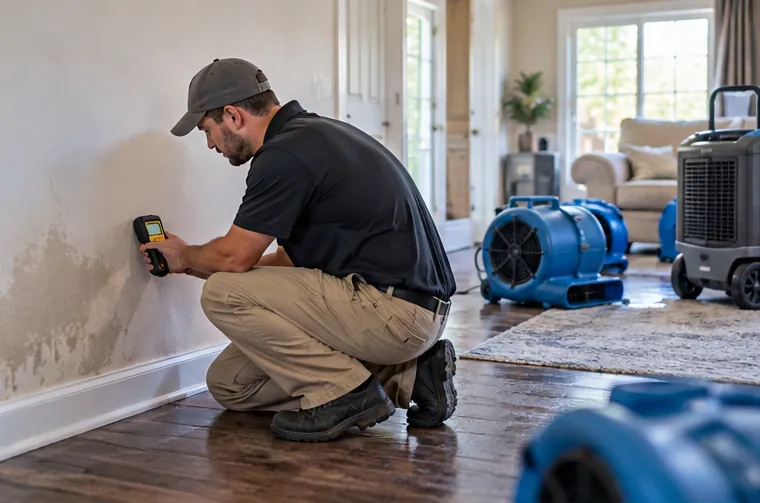
Go back through the source list above. Check humidity daily for a week. If the reading stays above 60 percent after the area looks dry, the building is still holding water or taking in more. The HVAC system can also carry smell through the house if ducts, drip pans or a coil are wet, so have the system checked if the smell shows up at vents. The CDC says to clean and dry out a flooded home fully and quickly, so a smell weeks later is a sign that part of that job was missed.
When should I call a restoration team?
Call when you cannot find the source, the smell follows a flood or sewage, or you suspect water inside walls or under flooring. Call earlier rather than later, because the EPA's window for drying is 24 to 48 hours. A smell that lingers means that window may already have passed.
Restoration teams differ in what they offer, so confirm directly whether a company does moisture assessment, drying or odor work, and ask for readings and photos. Ask whether a restoration team will measure the structure before and after. The restoration team sets its own terms. For water you can see, start with emergency water damage restoration. For the cost side, see water damage restoration cost in Knoxville.
Sources: EPA mold and moisture guide; EPA, Mold Cleanup in Your Home; CDC, About Mold and Your Health; IICRC S500; Triple-I, Which disasters are covered; Knox County Stormwater, Floodplain.