The short version
Buying a house with water damage can work if the source is fixed, the damage is limited and there is no hidden mold. Look for stains, smells and fresh paint, get a moisture or leak inspection before closing, ask the seller about past repairs and claims, and negotiate with written estimates.
Is it worth buying a house with water damage?
It can be, if the source is found and fixed, the damage is limited and there is no hidden mold. Buying a house with water damage is a risk that depends on three things you can check: where the water came from, how far it spread and how long it sat.
- The source. A one-time event, such as a burst pipe that was repaired, is a different story from a roof or foundation that still lets water in.
- The extent. A stain on a ceiling is smaller than wet framing, a soft subfloor or a damp crawl space.
- Mold. If water sat for longer than the first 24 to 48 hours, ask whether mold is present. The EPA says to dry wet areas in that window to prevent mold growth.
Do not guess the cost from the stain. Get a written assessment from the people who will do the work. See the restoration cost guide for how restoration teams price different kinds of damage.
What are the red flags of water damage during a showing?
Look for stains, smells, soft spots and signs that someone covered something up. A fresh coat of paint on one wall or ceiling patch in an otherwise older room is worth a question. The table lists common signs, what they can mean and what to ask.
| Sign | What it can mean | What to ask |
|---|---|---|
| Brown or yellow ceiling stain | A roof, attic or upstairs plumbing leak, past or present | When did it happen and was the source repaired? |
| Fresh paint on one patch | A repair, or a cover-up of staining | What was painted over and why? |
| Musty or earthy smell | Moisture in a basement, crawl space or wall cavity | Has the space ever had standing water? |
| Buckled or cupped floors | Moisture under or in the flooring | Was there a leak, flood or plumbing repair near this floor? |
| Bubbling paint or peeling wallpaper | Moisture behind the surface | Is there plumbing or an exterior wall behind it? |
| White chalky deposits on basement walls | Water seeping through masonry over time | Does the basement take on water after heavy rain? |
| Soft or swollen cabinet floors under sinks | A slow leak at a supply line or drain | Have the under-sink lines been replaced? |
| New sump pump or dehumidifier in a basement or crawl space | A known moisture problem the owners are managing | Why was it installed and how often does it run? |
For a longer list of what to look for, see signs of water damage, and water damage smells if the first thing you notice is an odor.
What does a home inspector check, and what do they miss?
A general home inspector looks at the visible parts of the house and reports what they can see and reach on the day. They note stains, active leaks, signs of past moisture and conditions that can lead to water problems. They do not open walls, lift flooring or take the house apart.
That means hidden damage can slip through. Water behind finished walls, under flooring or in a sealed crawl space may not show on a standard visit, especially if it dried out and no leak is active that day. A report that says nothing about water is not proof that there was none.
Read the inspection report closely. Look for phrases like staining noted, evidence of past moisture or recommend further evaluation. When the report suggests more work, take it seriously and follow up before closing, not after.
Should I get a moisture or leak inspection before closing?
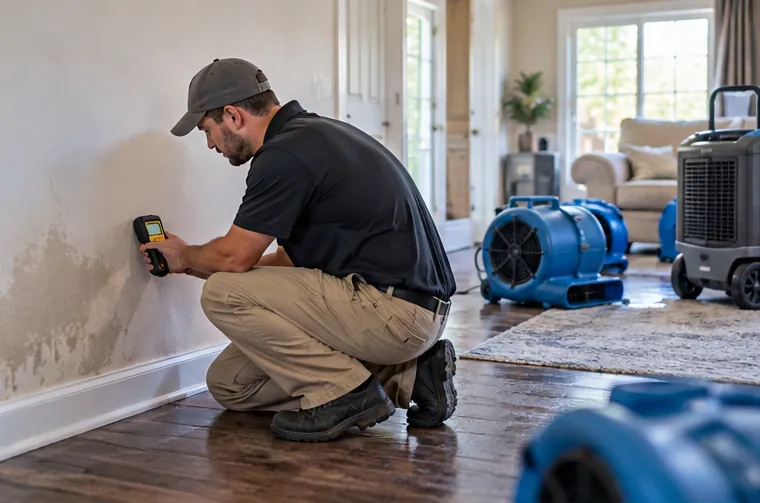
Yes, when the house shows any sign of water. A separate moisture or leak inspection uses meters and, where needed, other tools to find wet material that the eye cannot see. It costs money and time up front, but it is smaller than a surprise after closing.
- Ask whether the inspector will take moisture readings at the stains and in the basement or crawl space.
- Ask for photos and a written report you can share with the seller and your agent.
- If you suspect mold, read the mold after water damage guide before you decide whether to test or bring in a specialist.
- Check the crawl space and basement yourself too, since they are common places for moisture in East Tennessee homes.
Knox County takes part in the National Flood Insurance Program, and flood maps are on KGIS. Properties outside mapped flood zones can still flood from runoff, blocked drains, sinkholes and undersized pipes, so check the map and ask about the lot.
What should I ask the seller about past water damage?
Ask direct questions and ask for answers in writing. Sellers and their agents often know more than a one-visit inspection will show.
- Has the house ever had water damage, a leak or flooding? Ask where and when.
- What was repaired, and who did the work? Ask for invoices and any warranty paperwork.
- Was an insurance claim ever made for water damage? Ask the seller and your agent about past claims and repairs.
- Is there a sump pump, dehumidifier or French drain, and why? A system that runs often points to a known problem.
- Has the roof, water heater or plumbing been replaced recently? Ask for dates and receipts.
Past claims can matter for insurance after you buy. The Insurance Information Institute says about one in 60 insured homes has a water damage or freezing claim each year, so a previous claim is not unusual, but ask your own insurer how they treat a house with one.
What if the seller did not disclose water damage?
Gather proof first: photos, the inspection report, repair invoices and anything the seller or agent said in writing. What you can do depends on the contract, the disclosure forms and state law, none of which this page can interpret.
Ask your real estate agent what was disclosed on the forms you received, and ask a Tennessee attorney about a specific dispute. Do not start repairs that destroy evidence until you have photographed the damage and, if you have a claim, talked to your insurer.
This is general information. Contracts, disclosure forms and state law decide what a seller had to say, so ask a Tennessee attorney or the relevant agency about your situation.
How do I negotiate repairs or credits for water damage?
Use the inspection report and written estimates, then ask for the repair, a credit or a lower price. Estimates carry more weight than opinions. A request that says here is the problem and here is a written quote is easier for a seller to accept than a request that says fix everything.
- Ask for the source to be fixed before closing, with receipts and, where possible, proof that the area is dry.
- Ask for a credit or price change for damage you will repair yourself, backed by a written bid.
- Keep the contingency dates in mind. Your contract sets how long you have to inspect and respond. Your agent can explain yours.
- Be ready to walk away. If the source is unknown or the seller will not allow further inspection, that is a signal in itself.
Restoration teams differ on how they scope and price work, so ask each one what is included. See choosing a restoration company for questions to ask.
What if I find water damage after I move in?
Stop the source, document everything and call your insurer before major repairs. Many buyers find stains and soft spots only after furniture comes out and the house is lived in. Move quickly, because water that stays wet for more than the first 24 to 48 hours can lead to mold.
- Shut off the water to the affected area if a pipe or fixture is leaking.
- Photograph and video the damage, with dates, before cleanup.
- Call your insurer. Triple-I advises protecting the property from further damage and holding off on major permanent repairs until the adjuster has assessed the damage.
- Pull out your inspection report and any seller disclosures to see what was noted.
- Get the area dried by a restoration team and keep every receipt.
Policies often exclude damage from lack of maintenance and mold, and the insurer will want to know when the damage began, so see the water damage insurance claims guide. If a claim is denied, the Tennessee Department of Commerce and Insurance takes complaints on policies written in Tennessee.
I am selling a house with water damage. What should I do?
Fix the source, dry the house, document the work and disclose what you know. A house with a repaired, documented leak is easier to sell than one with a stain and no explanation. Buyers and inspectors will find stains, and unexplained patches cause more problems than an honest record.
- Fix the source first. Drying a house with an active leak only delays the next problem.
- Dry it properly. A restoration team can take moisture readings and document the drying. See structural drying for what that involves.
- Keep invoices, photos and any warranty to hand to buyers.
- Disclose what you know. Disclosure rules vary, so ask your agent or a Tennessee attorney what must be disclosed in your sale.
- Do not hide it. Painting over a stain without fixing the cause tends to come out in the inspection.
The right level of repair depends on the damage, the timeline and the price you want. Your agent can help you decide between repairing before listing and selling as is.
Sources: EPA mold and moisture guide; Insurance Information Institute, Homeowners Insurance Facts; Insurance Information Institute, Settling insurance claims after a disaster; Knox County Stormwater, Floodplain; Tennessee Department of Commerce and Insurance, File a Complaint.