For Oneida and Scott County homeowners
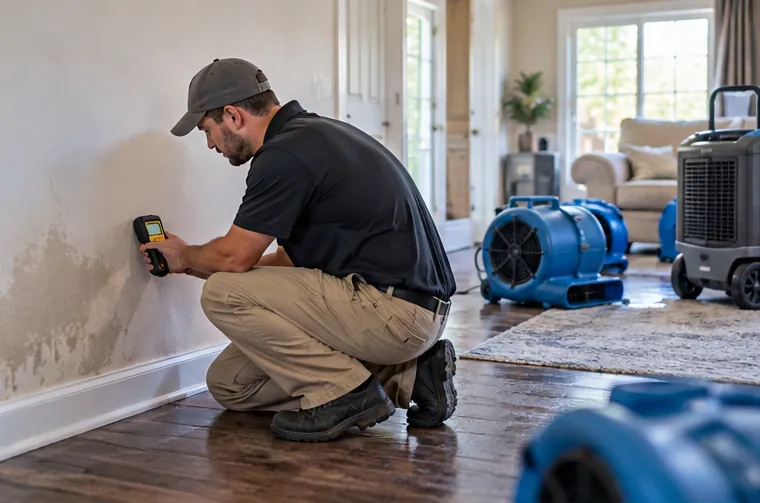
For water damage restoration in Oneida, TN, shut off the main valve, photograph everything and start drying in the first 24 to 48 hours. Runoff from plateau hills and creek water is flood-type water and needs a professional. We take requests from Oneida, Huntsville, Helenwood, Winfield, Robbins and Elgin.
Which Scott County towns and ZIP codes do requests come from?
Requests come from Oneida (37841), Huntsville (37756), Helenwood (37755), Winfield (37892), Robbins (37852) and Elgin (37732). This is plateau country, a long drive from Knoxville, so restoration teams differ on whether they reach it. Confirm your address on the first call.
Oneida is the largest town in the county and Huntsville is the county seat. To the east, Campbell County is on the LaFollette page, Morgan County is on the Wartburg page, and Anderson County is on the Clinton page.
Why does the Cumberland Plateau matter for water damage in Oneida?
Scott County sits atop the Cumberland Plateau, and Wikipedia calls the county hilly. Oneida covers 10.3 square miles and had 3,787 residents at the 2020 Census, every one of them counted as rural. The town is named for Oneida, New York, home of railroad executives who helped develop it in the late 19th century.
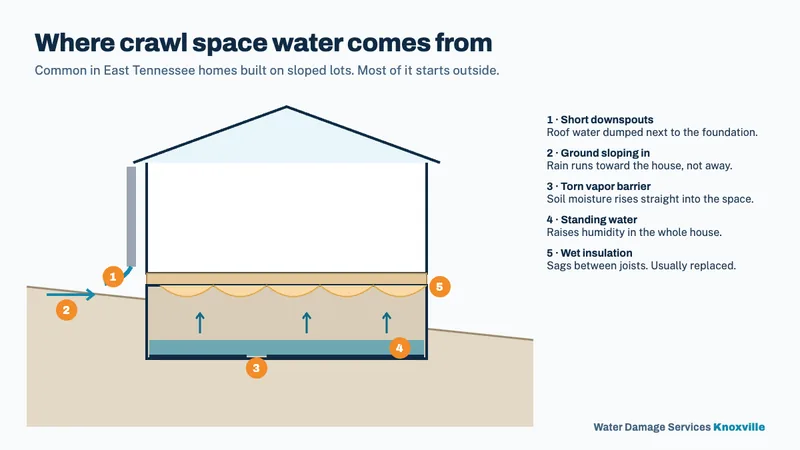
Hilly ground means water runs to the low corner of a lot. Check where gutters discharge and whether the ground slopes toward the foundation. Water that enters a house from outside is Category 3 under the IICRC S500 standard, so read flood cleanup before touching it.
What does Big South Fork mean for homes nearby?
The Clear Fork and the New River meet in southwestern Scott County and form the Big South Fork of the Cumberland River. Wikipedia says the Big South Fork averages 1,760 cubic feet per second, but the largest flow on record was 93,200, and about half of its yearly flow comes from January through March.
Those numbers describe a river that swings hard in winter and spring. Most Oneida homes sit on the plateau, well away from the gorge, but low spots near creeks and the river feeders deserve a look after a storm. The area's drainage is also shaped by the sandstone and rugged relief around the gorge, which Wikipedia says reaches 1,900 feet near the confluence. A flooded basement or a wet crawl space after thaws is the most common result.
How did coal and oil shape older neighborhoods?
Helenwood was platted in 1859 as Homestead and settled as a coal-mining community. On April 5, 1935, a dynamite explosion destroyed fifteen homes there and damaged many other homes and businesses. The New River, Wikipedia says, drains rock with extensive coal strip mining, and an area developed as an oil field.
That history says the older houses in these communities were often built quickly and altered many times since. It does not say how old yours is, so look up the year and plan for it.
- Homes built before 1978 may have lead paint. The EPA's Renovation, Repair and Painting rule applies to paid work that disturbs it.
- Patched plumbing fails at old fittings. See signs of water damage for what to watch for.
- Additions and mobile-home skirting can trap moisture beneath the floor.
How do Huntsville, Winfield and Robbins differ?
Each sits on the plateau but with different features. The table uses only what Wikipedia says and the 2020 Census.
| Town (ZIP) | Water and terrain | 2020 population |
|---|---|---|
| Oneida (37841) | Plateau town near Big South Fork; 1,818 housing units, 12.6% vacant | 3,787 |
| Huntsville (37756) | Atop the plateau, cliffs above New River on its southern edge | 1,270 |
| Winfield (37892) | Highest point Chitwood Mountain at 2,139 feet | 947 |
| Helenwood (37755) | Coal-era community along US 27 | 865 (2010 census) |
| Robbins (37852), Elgin (37732) | Robbins is a US 27 community with a 1920s Gothic Revival church; Elgin has no Wikipedia article used here | Not stated |
Huntsville is the county seat, chosen in 1849 partly for a good spring. Its southern edge runs along cliffs above the New River, so lots near that rim drain fast toward it. In Winfield, Chitwood Mountain rises to 2,139 feet, and houses on its slopes get runoff from above.
What is special about the old courthouse square in Huntsville?
Huntsville built a courthouse square in 1906 from beige native sandstone. The courthouse burned in 1946, but two sandstone buildings remain, the First National Bank building and the Old Scott County Jail, and both are on the National Register of Historic Places.
If you own a building like that, ask the restoration team how they would dry the structure in place before anything comes out, and ask the town what rules apply. Stone walls hold moisture for a long time, so ask what readings they will take and how often. The structural drying guide explains how readings are logged.
What should owners do about empty homes and cabins?
Treat an empty house as a place where a small leak grows into a large one. Scott County had 9,802 housing units in 2020 and 12.0% were vacant, so a good many homes are rentals, seasonal cabins or houses between owners.
- Close the main water valve whenever you leave.
- In cold weather keep the heat on. The American Red Cross says to leave it no lower than 55 F when you are away.
- Ask a neighbor to look in after a hard freeze.
- If you find damage, photograph it before moving anything, then call your insurer.
Plateau winters freeze exposed lines. The burst pipe guide shows where they tend to split.
Does insurance pay for creek and runoff water?
Usually not. The Insurance Information Institute says flood is excluded under standard homeowners and renters policies and needs a separate policy. The NAIC adds that ground water, rain runoff and snow melt are typically not covered, while water from a home's plumbing typically is.
Living near the Big South Fork does not change that rule. Call your agent first and read the insurance claims guide before you sign a work order.
What should I do in the first 24 to 48 hours?
Stop the water, keep people safe and start drying. The EPA says to dry water-damaged areas and items in the first 24 to 48 hours to prevent mold growth.
- Shut off the main water valve, and the power to wet areas if you can do it safely.
- Photograph and video everything before moving it.
- Call your insurer and ask what they need before work starts.
- Call a restoration team, tell them your town, and ask whether they travel to it.
- Keep indoor humidity below 60 percent, ideally 30 to 50, as the EPA recommends.
The emergency page has a longer checklist, and mold after water damage covers growth that has already started. If the loss is bigger than one room, the water damage repair guide explains the rebuild stage.
Sources: Oneida, Tennessee; Huntsville, Tennessee; Helenwood, Tennessee; Winfield, Tennessee; Robbins, Tennessee; Scott County, Tennessee; Big South Fork of the Cumberland River; New River (Tennessee) (all Wikipedia, citing the 2020 Census where noted); EPA, A Brief Guide to Mold, Moisture and Your Home; IICRC S500; Triple-I, disasters covered by homeowners insurance; NAIC homeowners insurance; American Red Cross, frozen pipes.