The short version
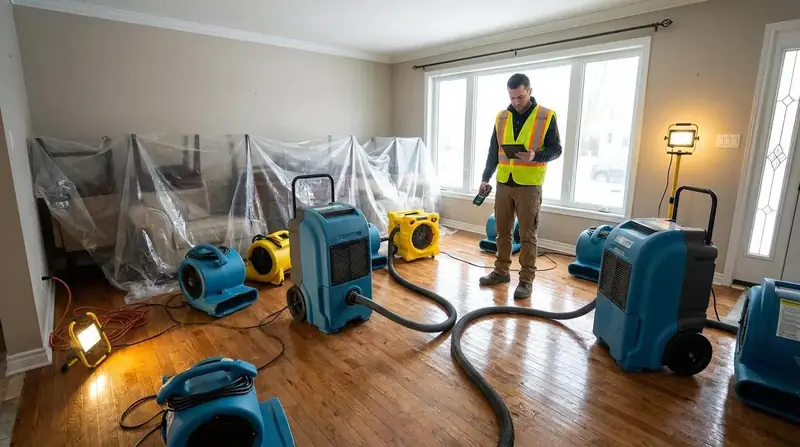
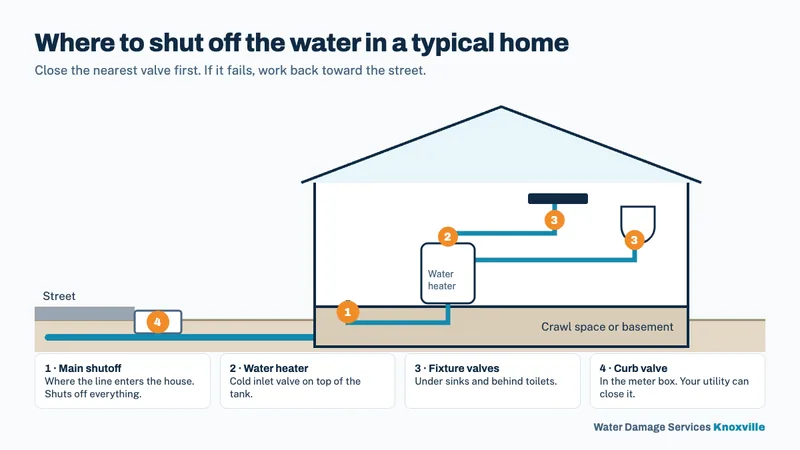
Shut off the water at the main valve, keep clear of wet electrics, and photograph the damage. Then get a restoration crew in to extract the water and set up drying equipment as soon as you can. Wet materials need to be dry within 24 to 48 hours to avoid mold, so speed matters more than anything else.
What counts as a water damage emergency?
Treat it as an emergency when water is still flowing, when it is near electrics, or when it is soaking into drywall, insulation or a subfloor. Those materials start to break down within hours, and the EPA advises drying wet materials within 24 to 48 hours to prevent mold.
A drip under a sink that you have caught and wiped up is not an emergency. A supply line that burst while you were at work is.
- A burst or split pipe, often after a hard freeze
- A failed water heater, washing machine hose or dishwasher line
- Water coming through a ceiling from a bathroom or unit above
- A toilet overflow or sewer backup into a basement drain
- Several rooms wet, or water that has been sitting more than a day
Is it clean water, grey water or sewage?
Restoration crews sort water into three categories, based on the IICRC S500 standard for water damage restoration. The category decides what can be dried in place and what has to go.
| Category | Typical source | What it usually means |
|---|---|---|
| 1. Clean water | Supply line, burst pipe, tub overfill | Most materials can be dried in place if work starts quickly. |
| 2. Grey water | Washer, dishwasher, toilet overflow without waste | Carpet pad is usually removed. Surfaces are cleaned before drying. |
| 3. Black water | Sewage, river or creek flooding, standing water left for days | Porous materials touched by the water are removed. Protective gear is needed. |
Clean water does not stay clean. After a day or two in a warm house it can be treated as grey water, which is one more reason to start early.
What does an emergency crew do on the first visit?
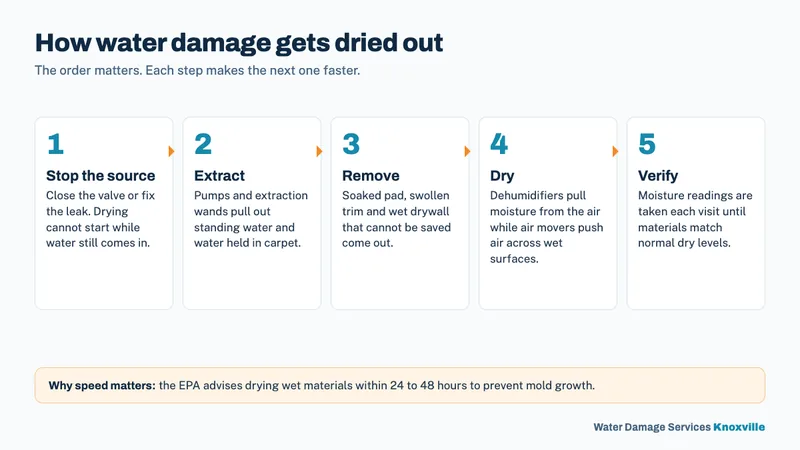
- Stops the source if you have not already, and makes the area safe.
- Inspects with meters. Moisture meters and thermal cameras show how far water has wicked into walls and under floors.
- Extracts standing water. Pulling water out with pumps and extraction tools does more in an hour than fans do in a day.
- Removes what cannot be saved. Soaked carpet pad, swollen baseboards and the bottom of wet drywall are common removals.
- Sets drying equipment. Dehumidifiers and air movers are placed for the size of the area and the materials involved.
- Documents everything. Photos, readings and an equipment list for your insurance claim.
A return visit, usually daily, checks readings and moves equipment. Drying is finished when materials read dry, not after a set number of days.
What is water mitigation, and how is it different from restoration?
Water mitigation is the emergency work that stops water damage from getting worse: stopping the source, extracting water, removing soaked materials and drying the structure. Restoration is the repair work that follows, such as new drywall, flooring and paint. Mitigation comes first, and emergency water removal is usually its first step.
When people search for emergency water damage restoration in Knoxville, mitigation is usually what they need that day.
Insurers often handle the two as separate parts of one claim. Some providers do both. Others only mitigate and hand the rebuild to a general contractor.
| Water mitigation | Restoration | |
|---|---|---|
| Goal | Stop and limit the damage | Repair the home to how it was |
| When | Right away, before mold can start | After materials read dry |
| Typical work | Extraction, tear-out, drying equipment, moisture readings | Drywall, paint, flooring, cabinets, trim |
| Who does it | A restoration or mitigation provider | The same provider or a general contractor |
What should happen in the first 24, 48 and 72 hours?
In the first 24 hours the water should be stopped, extracted and photographed, and drying equipment should be running. The EPA advises drying wet materials within 24 to 48 hours to prevent mold, so that window is the target. By the third day, readings should be falling every visit.
| Time since the leak | What should be happening | Why it matters |
|---|---|---|
| First 24 hours | Source stopped, photos taken, insurer told, water extracted, equipment set | Extraction removes most of the water before it wicks further. |
| 24 to 48 hours | Soaked pad and wet drywall removed, first readings logged | This is the EPA window for drying before mold growth. |
| 48 to 72 hours | Equipment moved to the wettest spots, readings compared with day one | Materials still soaked now are more likely to be removed than dried. |
If no one has started drying by the second day, say so when you call. It changes what the crew brings.
Can you clean up mold yourself after a leak?
For small patches, often yes. The EPA says that if the moldy area is less than about 10 square feet, roughly a 3 ft by 3 ft patch, you can handle it yourself in most cases. Larger areas, mold inside walls or HVAC, or mold after sewage call for a professional.
- Fix the water problem first, or the mold comes back.
- The EPA warns not to paint or caulk moldy surfaces. Clean and dry them first.
- If the water was sewage or other contaminated water, the EPA advises calling a professional experienced with contaminated-water damage.
What if the emergency is a burst pipe, a ceiling leak or a sewer backup?
Each of these starts differently, so each has its own guide with the first steps in order.
- Burst pipe water damage: shutting off and draining the lines, thawing frozen pipes safely, and why the leak often starts on the thaw.
- Ceiling water damage: draining a bulging ceiling safely and finding the source from when it drips.
- Sewage backup cleanup: keeping your household safe from Category 3 water and who is responsible for the line.
- Basement flooding cleanup: sump failures, groundwater and finished basements.
What affects the cost of emergency restoration?
We do not quote prices, because the provider sets them. These are the things that move the number most:
- The water category, since contaminated water means more removal and protective gear
- How many square feet are wet, and on how many floors
- The materials involved, such as hardwood, plaster or finished basements
- How long the water sat before work started
- After-hours or weekend call-out charges, if the provider uses them
Ask for the pricing method in writing. Many restoration companies bill insurers using estimating software price lists. Ask what you owe if the claim is reduced or denied.
Will homeowners insurance pay for emergency water damage?
Report the loss early, but do not wait for an adjuster before stopping the water or starting emergency drying. Most homeowners policies expect you to prevent further damage. Keep receipts for anything you buy and photos of everything you throw out.
Sudden, accidental leaks such as a burst pipe are often covered. Slow leaks over months, and flooding from outside water, usually are not under a standard homeowners policy. Your policy wording is what counts. For outside water, see our flood cleanup guide.
Water claims are common and not small. According to the Insurance Information Institute, about one in 60 insured homes has a water damage or freezing claim each year, and the average claim in that category was $15,400 over 2019 to 2023.
How do you file a water damage insurance claim, step by step?
Stop the water, document the damage, report the loss to your insurer, and keep every record of the emergency work. Insurers expect you to prevent further damage, so emergency drying does not have to wait for an adjuster. Get your claim number on the first call and use it on everything.
- Stop the source and make it safe. Close the main valve and keep clear of wet electrics.
- Photograph before anything moves. Wide shots, close-ups, the water line on walls and serial plates on appliances.
- Report the loss. Call your insurer or agent, write down the claim number, and ask whether they want to inspect before tear-out.
- Start mitigation. Let a provider extract and dry. Ask for their moisture logs and equipment list.
- Keep what is removed, or photos of it. Cut a sample of carpet and pad if the adjuster may want it.
- Save every receipt. Fans, towels, a hotel night, anything you pay for because of the loss.
- Compare the estimate with the provider's scope before you sign off on repairs, and ask about anything missing.
Sources: EPA, A Brief Guide to Mold, Moisture and Your Home; EPA, Mold Cleanup in Your Home; IICRC S500 Standard for Professional Water Damage Restoration; Insurance Information Institute, Homeowners and Renters Insurance.