The short version
Mold after water damage grows where materials stay wet, so the EPA says to dry the area in the first 24 to 48 hours. A musty smell, stains or peeling paint are warning signs. Patches under about 10 square feet can usually be cleaned yourself. Call a professional for anything larger, or for sewage.
How soon can mold start after a leak?
Mold can start on wet materials that stay damp, which is why the EPA tells you to dry water-damaged areas and items in the first 24 to 48 hours. Past that window, materials that never fully dried become the likeliest place for growth to begin.
The clock starts when the water arrives, not when you notice it. A pipe that weeps inside a wall or a slow drip under a sink can keep materials wet for a long time before any stain shows. That is why a leak found late is worth treating as a mold risk even if it looks small.
The CDC gives the same advice after a flood: clean up and dry out the home fully and quickly, in the first 24 to 48 hours, and remove carpets and upholstery that were soaked and cannot be dried right away. Fast drying is the single biggest thing that keeps water mitigation from turning into a mold job.
What are the signs of mold after water damage?
The usual signs are a musty smell, visible spots, staining, peeling or bubbling paint, and materials that warp or stay damp. Any one of them after a leak means moisture is still in the building.
- A musty smell after a leak. An earthy odor that gets stronger when the house is closed up often points to damp material you cannot see.
- Spots and fuzzy patches. Mold shows up in many colors, so color alone tells you little. Look along baseboards, ceiling corners and the bottom of walls.
- Staining. Brown or yellow rings and tide lines mean water reached that spot, even if the surface feels dry now.
- Peeling, bubbling or cracking paint and wallpaper that lifts at the seams.
- Warped or swollen materials such as cupped flooring, swollen baseboards or soft drywall.
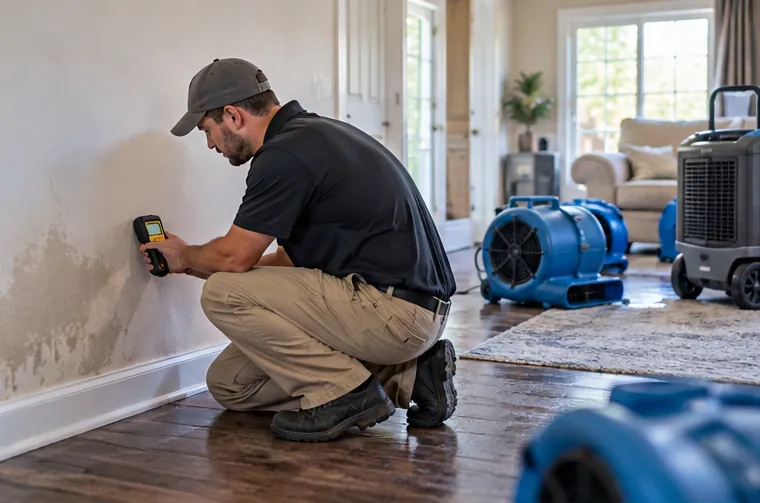
The reverse is also true. A leak can leave mold behind with no smell you notice and nothing on the surface. When in doubt, a moisture meter tells you more than your nose does, and a restoration team uses one as a normal part of a drying visit.
Where does mold hide after each kind of leak?
It hides wherever water soaked in and air could not reach: inside walls, under flooring, in crawl spaces, above ceilings, inside cabinets and in ductwork. The table below matches each spot to the leak that usually causes it and what to look for.
| Where it hides | Leak that usually feeds it | What you may notice |
|---|---|---|
| Inside walls, behind drywall | Pipe break in a wall, appliance line, rising water at the base | Bubbling paint, stains near the floor, a smell with nothing visible |
| Under flooring and carpet pad | Dishwasher, washer or toilet overflow, a slab or supply leak | Cupping, lifting seams, a damp or musty smell at the floor |
| Crawl space | Supply or drain leaks below the floor, runoff, high humidity | Damp insulation, a musty smell coming up through the floor |
| Attic and ceilings | Roof leak, attic pipe or vent leak | Ceiling stains, sagging drywall, dark patches on rafters |
| Cabinets and vanities | Sink supply lines, drains, dishwasher hoses | Swollen cabinet floors, warped panels, a smell when doors open |
| HVAC and ductwork | Condensate line backup, water reaching ducts in a crawl space | A musty smell when the system runs, water near the air handler |
Knoxville homes with crawl spaces deserve special attention, since water and humidity down there stay out of sight. See crawl space water removal for how those spaces get dried, and basement flooding cleanup if the water came in at ground level.
Is mold from water damage dangerous?
It can be. The CDC says mold can cause a stuffy nose, sore throat, coughing or wheezing, burning eyes and skin rash. How strongly a person reacts varies a great deal.
People with asthma or a mold allergy may have severe reactions. The CDC adds that people with weakened immune systems and people with chronic lung disease may get lung infections from mold. If anyone in the home is in one of those groups, treat any growth as more urgent and talk to a doctor about symptoms.
You do not need to know the exact type of mold to act. The cleanup and drying steps are the same either way, and the goal is to remove the moisture that lets it grow.
What is the difference between water damage and mold?
Water damage is the harm done by the water itself: soaked drywall, swollen wood, ruined carpet. Mold is a living growth that can follow if the wet materials stay damp. They are two different problems, handled in two different ways.
Restoration dries the structure and removes what cannot be saved. Mold work deals with growth that is already there. A restoration team that extracts water and dries your home may or may not also handle mold, and restoration teams differ on this. Ask directly before you book anyone.
Can I clean up mold after water damage myself?
Often, yes, for a small patch. The EPA says that if the moldy area is less than about 10 square feet, roughly a 3 ft by 3 ft patch, you can in most cases handle the job yourself.
The CDC steps for hard surfaces are plain:
- Protect yourself. Wear rubber boots, gloves and goggles, and open windows for fresh air.
- Clean the surface with household cleaner, or soap and water.
- If you use bleach, mix no more than 1 cup of household bleach in 1 gallon of water.
- Never mix bleach with ammonia or other cleaners.
- Dry the area fully. Cleaning without drying only gives mold a fresh start.
Two things never to do. The EPA says not to paint or caulk moldy surfaces, since that covers the problem without removing it. And do not keep a soaked carpet or upholstered piece that cannot be dried, because the CDC advises removing those.
If mold keeps coming back to the same spot, moisture is still getting in. Fix the source, whether that is a plumbing leak, a roof leak or a damp crawl space, before you clean again.
When should I call a professional for mold?
Call a professional when the patch is larger than about 10 square feet, when the water was sewage or flood water, when mold may be in the HVAC system, when it is hiding inside walls, or when someone in the home has a health condition that mold makes worse.
- Larger than about 10 square feet. That is the EPA line for what most people can handle alone.
- Sewage or contaminated water. The EPA says to call a professional experienced with buildings damaged by contaminated water. See sewage backup cleanup.
- The HVAC system. Ducts and air handlers spread spores through the house, and cleaning them is not a wipe-down job.
- Hidden growth. Mold behind drywall or under flooring means materials may need to be opened up. A water removal restoration team can read moisture levels and tell you how far the damage goes.
- Health conditions. Asthma, mold allergy, lung disease or a weakened immune system all raise the stakes.
What does mold remediation involve?
Mold remediation is the work of removing mold growth and fixing the conditions that caused it. Water damage restoration is the drying and repair that comes before or alongside it. The two overlap, but they are not the same job.
In plain terms, remediation usually means finding where the growth is, containing the area so spores do not spread, removing materials that cannot be cleaned, cleaning the surfaces that can be, and drying everything. What a given company includes, and in what order, differs. Get the scope in writing and ask what happens if the moisture reading is still high afterward.
This site refers people to water damage restoration teams. Some of those restoration teams also do mold remediation and some do not. Ask the restoration team directly whether they handle mold, and if not, ask who they would send you to.
How much does mold remediation cost?
National guides put mold removal in the low thousands. These figures are published estimates, not quotes, and what a Knoxville restoration team charges for your house will differ.
| Source | Figure | What it covers |
|---|---|---|
| Bob Vila | $1,100 to $3,400, average $2,200 | Removing mold, as part of its water damage cost guide |
| Fixr | $4.75 to $5.50 per square foot | Restoration of mold-damaged areas, one of several material rates it lists |
Bob Vila's range comes from its 2023 water damage restoration guide. Fixr's per-square-foot rate is from its 2025 restoration cost page. Size, location in the house and how far the moisture spread all move the price. Written, itemized quotes make it easier to compare. For the wider picture, see water damage restoration cost.
Does homeowners insurance cover mold?
Sometimes, and often with limits. The answer depends on what caused the water and what your policy says, so read the wording before you assume either way.
The National Association of Insurance Commissioners says homeowners policies often exclude the cost of damage from mold. The Insurance Information Institute says policies will not cover damage from lack of maintenance, mold or pests, since upkeep is the owner's job. Yet the same group notes that its water damage and freezing category includes damage caused by mold, if covered.
Put together, mold that follows a covered, sudden leak, such as an accidental pipe discharge, may be covered, often with a cap. Mold from a slow leak, neglect or flooding is much less likely to be. NAIC says water damage from plumbing or a roof leak is typically covered, while ground water and rain runoff are not.
Report the loss to your insurer right away, photograph everything and save receipts. Our guide to water damage insurance claims walks through the steps in order.
How do I prevent mold after water damage?
Dry everything fast, keep humidity down and remove soaked materials that cannot be dried. Moisture is the thing mold needs, so the fix is to take it away.
- Dry in the first 24 to 48 hours. The EPA and CDC both give this window.
- Watch indoor humidity. The EPA says to keep it below 60 percent, ideally between 30 and 50 percent relative humidity. A cheap hygrometer shows your number.
- Remove soaked porous materials. Carpet, pad and upholstery that cannot be dried right away should go, as the CDC advises.
- Keep dehumidifiers and fans running until readings are normal, not just until the surface feels dry.
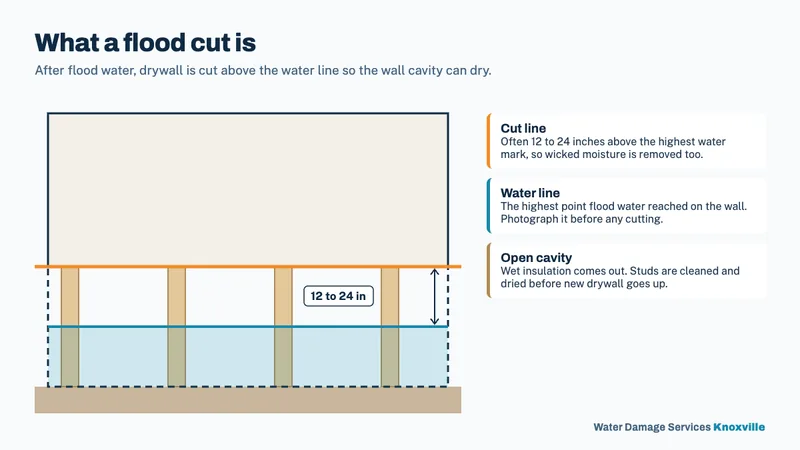
- Open wall cavities when needed. Wet insulation and drywall hold water against the studs.
- Fix the source. A repaired pipe or roof stops the next round of moisture.
Start with water mitigation as soon as you find the leak. Drying equipment and moisture readings are what make the 24 to 48 hour window realistic in a real house.
Sources: EPA, A Brief Guide to Mold, Moisture and Your Home; EPA, Mold Cleanup in Your Home; CDC, About Mold and Your Health; Triple-I, Which disasters are covered by homeowners insurance?; Insurance Information Institute, Homeowners Insurance Facts; NAIC, Homeowners Insurance; Bob Vila, Water Damage Restoration Cost; Fixr, Water Damage Restoration Cost.