For Pigeon Forge owners and managers
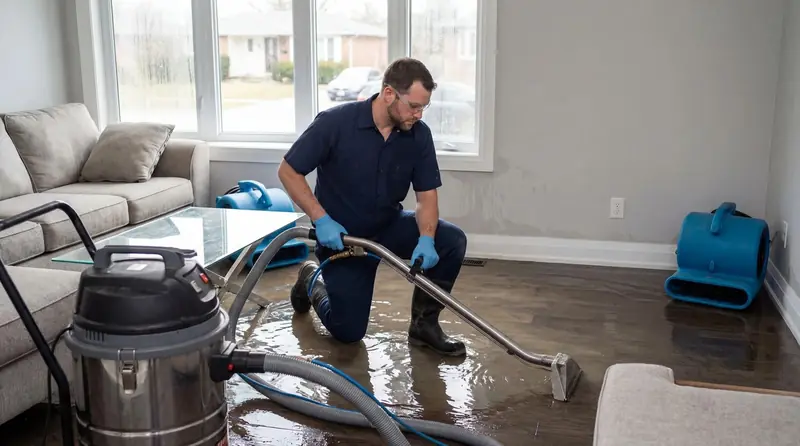
Shut off the water, photograph everything and start extraction as soon as possible. In Pigeon Forge the biggest risk is time: nearly half of local housing units were counted as vacant in 2020, so leaks in rentals often run for days before anyone sees them. We take requests from ZIP 37863 and nearby Sevier County.
Which Pigeon Forge addresses do you take requests from?
We take requests from Pigeon Forge ZIP code 37863 and the nearby Sevier County ZIPs 37864 and 37868. A restoration provider who serves the area confirms whether they can reach your address before anything is booked.
Pigeon Forge is small on paper, with 6,343 residents at the 2020 Census. Its buildings tell a different story. The same census counted 4,699 housing units, and 47.7% of them were vacant, a figure that includes rentals and second homes with no one living in them full time. Add the hotels, theaters and restaurants on the Parkway, and the town has far more plumbing than people.
Why do leaks in Pigeon Forge rentals cause so much damage?
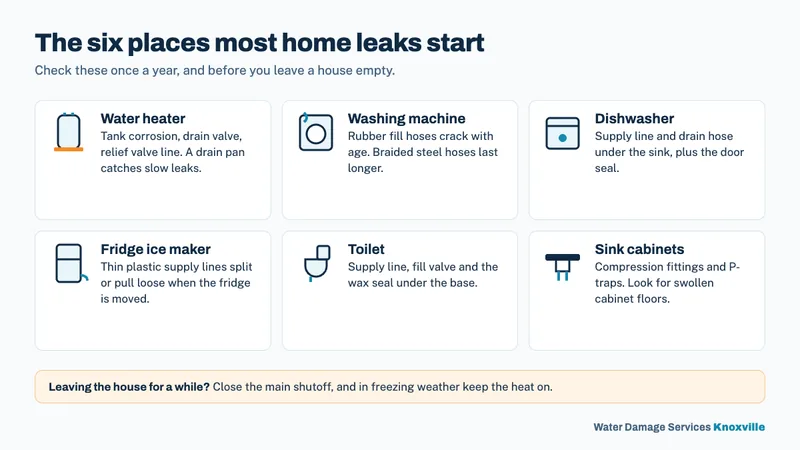
Because nobody is there when they start. A supply line that fails in a lived-in house is usually found within hours. In a cabin or condo between bookings, the same leak can run until the next cleaner or guest walks in, often days later.
By then the water has gone under flooring, into cabinets and through to the room or unit below. The job moves from a few hours of extraction to tearing out subfloor, drywall and trim. In a multi-unit building, one failed ice maker line can reach three units.
- Ask cleaners to open the cabinet under every sink on each turnover and look for damp wood.
- Fit leak sensors near water heaters, washers and dishwashers, especially in units that sit empty midweek.
- Make sure property managers know where the main shutoff is and have authority to call for emergency water removal.
How is water damage handled in hotels and attractions on the Parkway?
Commercial buildings follow the same restoration steps as homes, but the stakes are different. A hotel loses income for every room taken out of service, and a restaurant may have to close a kitchen until it is cleaned and inspected.
- Phased work. Ask whether the provider can dry one wing or floor at a time so the rest of the building stays open.
- Documentation for business interruption claims. Daily moisture readings, photos and room counts help support lost-income claims under a commercial policy.
- Sprinkler and fire system leaks. These can release a lot of water fast. The fire system contractor needs to be involved before anything is reset.
What happens when the Little Pigeon River rises?
Pigeon Forge sits on the West Fork of the Little Pigeon River, which flows north from the slopes of Mount Collins in the Great Smoky Mountains, and Walden Creek joins it in town. Heavy rain in the mountains can raise both quickly, and low ground near the river and creek sees surface water first.
Water from outside is treated as contaminated under the IICRC S500 standard, so cleanup means removing soaked materials rather than drying them. It is also a flood insurance matter, since standard homeowners and many commercial policies exclude surface flooding. See our flood cleanup guide, and check an address on the FEMA Flood Map Service Center.
What are the most common water damage calls in Pigeon Forge?
- Supply line and ice maker leaks in rental cabins and condos found days later
- Water coming through ceilings from the unit or room above
- Hot tub plumbing and pump leaks on decks and lower levels
- Burst pipes in unheated or lightly heated units after a hard freeze
- Sprinkler and kitchen plumbing leaks in commercial buildings
If water is still moving, start with emergency water damage restoration. For the wider Sevier County picture, see our Sevierville guide.
What records do Pigeon Forge businesses need for a commercial water damage claim?
Pigeon Forge hotels, restaurants and attractions should record which rooms or areas closed, for how long and why, alongside the restoration crew's photos and daily moisture readings. A business interruption claim depends on showing both the physical damage and the lost use of the space.
| Record | Who keeps it | Why it matters |
|---|---|---|
| Rooms or areas out of service, by date | Front desk or manager | Ties lost income to the damage |
| Photos before and after removal | Restoration crew | Shows the extent of the damage |
| Daily moisture readings | Restoration crew | Shows when each area was dry |
| Inspection sign-offs | Manager | Shows when reopening was allowed |
| Cancelled bookings, events or tickets | Sales or box office | Supports the lost income figure |
Agree on a phasing plan before work starts: which wing, kitchen or show area is dried first. Keep guests out of contained areas. A restaurant kitchen may need cleaning and a health department check before food service resumes.
Who handles water damage in a Pigeon Forge condo association?
In a Pigeon Forge condo, the association usually handles common elements such as the roof, shared pipes and hallways, and each owner handles damage inside their unit. The exact split is set by the building's declaration and bylaws, so read them before you call an insurer.
| Area | Usually handled by | Where to check |
|---|---|---|
| Roof, exterior walls, hallways | Association | Master policy and bylaws |
| Shared supply and drain lines | Association, in many buildings | Declaration |
| Flooring, cabinets and fixtures inside a unit | Unit owner | Owner policy |
| Furniture and contents | Unit owner | Owner policy |
| Furnishings in a rental program | Owner or rental manager | Rental agreement |
When water crosses from one unit to another, each owner reports to their own insurer. Ask the manager for the incident report and the plumber's note on the cause. The insurers settle who pays later. Drying should not wait for that.
What should you do when Walden Creek or the West Fork floods a Pigeon Forge property?
When Walden Creek or the West Fork floods a Pigeon Forge property, stay out of moving water, keep power off in wet areas and photograph the damage before flood cleanup starts. Creek and river water counts as contaminated, so soaked materials are removed, not dried.
- Do not walk or drive through moving water. Ready.gov says six inches can knock a person down and one foot can sweep a vehicle away.
- Have an electrician check wet panels, outlets and hot tub wiring before power goes back on.
- Photograph the high-water line on every wall.
- Call your flood insurer and your property insurer early.
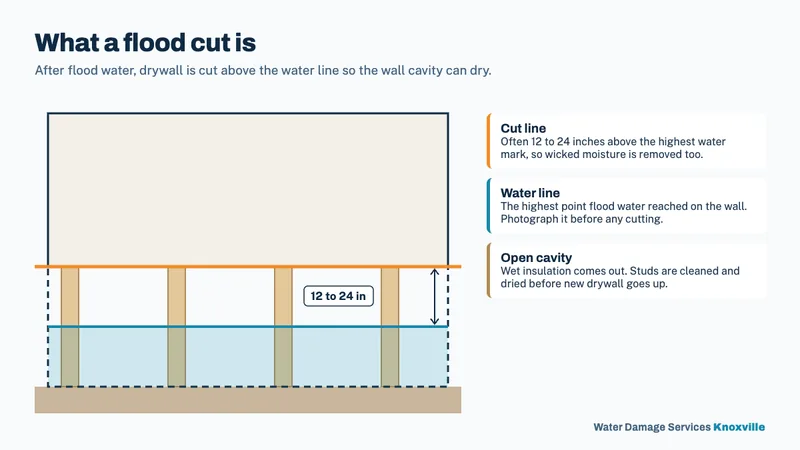
Once the water is out, the EPA advises drying within 24 to 48 hours to prevent mold. Flood-soaked drywall is usually cut out above the water line so the wall cavity can dry.
What does a good Pigeon Forge turnover inspection routine look like?
A good Pigeon Forge turnover routine has three layers: a quick leak check every turnover, a deeper monthly check and a pre-winter check before the first freeze. It takes minutes per visit and catches most leaks before they turn into emergency water damage.
- Every turnover: look under each sink, behind toilets, under the fridge and around the hot tub. Feel the floor in front of the dishwasher.
- Monthly: inspect water heater drain pans, washer hoses and ceilings on lower floors for stains. Test every leak sensor.
- Before winter: set the heat no lower than 55 F, as the American Red Cross advises for empty homes, and insulate pipes in crawl spaces and garages.
Give cleaners a short form to sign each visit. If a claim follows, a dated record showing the unit was dry at the last turnover is useful evidence.
Sources: Pigeon Forge, Tennessee (Wikipedia, citing the 2020 Census); IICRC S500; FloodSmart.gov; Ready.gov floods; EPA mold and moisture guide; American Red Cross frozen pipes guide.